
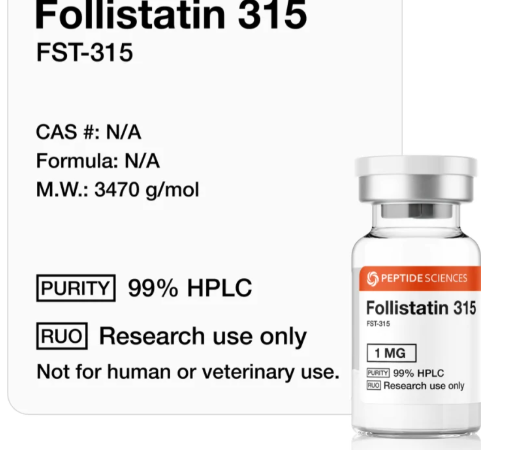
Follistatin-315 is one of several naturally occurring isoforms of follistatin, a globular glycoprotein that binds and neutralizes certain signaling ligands within the transforming growth factor beta (TGF-β) superfamily. A primary focus of laboratory research is its binding interaction with activins, which have tissue-dependent effects on cellular proliferation and differentiation. By acting as a soluble binding protein, follistatin can alter the availability of these ligands to their receptors, thereby shifting downstream signaling readouts in experimental systems.
The follistatin protein is produced as a precursor that undergoes processing to generate multiple isoforms, including forms commonly described as 315, 300, and 288 amino acids in length. While these isoforms share core binding characteristics, they differ in distribution and association with extracellular environments, which can influence how researchers select a specific isoform for experimental design. In addition to activins, follistatin-315 has been studied for binding interactions with myostatin-associated pathways in muscle-related model systems, as well as for broader roles in developmental and inflammatory signaling contexts examined under laboratory conditions.
Biochemical Characteristics
Structure of the unedited follistatin protein
Source: UniProt
Sequence: GNCWLRQAKNGRCQVLYKTELSKEECCSTGRLSTSWTEEDVNDNTLFKWMIFNGGAPNCIPCKETCENVDCGPGKKCRMNKKNKPRCVCAPDCSNITWKGPVCGLDGKTYRNECALLKARCKEQPELEVQYQGRCKKTCRDVFCPGSSTCVVDQTNNAYCVTCNRICPEPASSEQYLCGNDGVTYSSACHLRKATCLLGRSIGLAYEGKCIKAKSCEDIQCTGGKKCLWDFKVGRGRCSLCDELCPDSKSDEPVCASDNATYASECAMKEAACSSGVLLEVKHSGSCNSISEDTEEEEEDEDQDYSFPISSILEW
Molecular Weight: 34.7 kDa
PubChem CID: 178101631
Synonyms: Activin-Binding Protein, FST, FST-315
Research Applications
Follistatin-315 is studied in vitro and in animal models to evaluate how ligand binding and sequestration alters downstream signaling relative to appropriate control conditions. In cell-based assays, researchers commonly measure activin- and myostatin-associated pathway activity using endpoints such as SMAD phosphorylation, transcriptional reporter output, changes in target-gene expression, and markers linked to proliferation, differentiation, or extracellular matrix remodeling. Experimental comparisons typically involve untreated controls or ligand-stimulated controls to quantify changes attributable to the presence of follistatin-315 under defined conditions.
In animal studies, follistatin-315 has been used as a research tool to explore developmental and tissue-response phenotypes associated with altered activin signaling and related pathways. Reported outcomes in preclinical models include changes in tissue morphology, gene-expression patterns, and pathway-associated biomarkers measured across time and compared to control groups. Additional lines of research evaluate follistatin-activin balance in inflammatory and fibrotic model systems by measuring cytokine profiles, immune-cell infiltration markers, and remodeling-associated signals relative to controls. These findings are reported as observations in experimental models and do not imply clinical effects or human application.
Pathway / Mechanistic Context
Follistatin 315 functions primarily through high-affinity binding of activins, thereby preventing interaction with activin receptors and downstream SMAD-mediated signaling. This neutralization alters transcriptional responses regulated by TGF-β family pathways, offering a mechanistic framework for studying growth factor bioavailability and signal attenuation.
Additional mechanistic investigations have examined interactions between follistatin and myostatin within controlled experimental systems, contributing to broader understanding of ligand competition and pathway crosstalk.
Preclinical Research Summary
Preclinical studies utilizing cellular and animal models have explored follistatin-associated modulation of developmental signaling, inflammatory regulation, vascular biology, and fibrotic processes. Genetic disruption and recombinant protein studies have provided insights into isoform-specific functions and tissue-dependent signaling outcomes.
These investigations contribute to foundational knowledge of activin-follistatin regulatory systems without implying translational or clinical application.
Form & Analytical Testing
Supplied as a research-grade reagent
Identity confirmed via analytical characterization
Intended for controlled laboratory environments only
Not formulated for diagnostic, therapeutic, or clinical use
Article Author
The above literature was researched, edited and organized by Dr. Logan, M.D. Dr. Logan holds a doctorate degree from Case Western Reserve University School of Medicine and a B.S. in molecular biology.
Scientific Journal Author
Ruth A. Keri, PhD. Professor and Vice Chair at Department of Pharmacology in Case Western University School of Medicine. Dr. Keri is an Associate Director for Basic Research, Case Comprehensive Cancer Center. For more than 17 years, her research has focused on the genomic and signaling mechanisms that control mammary gland development and cancer. This has involved generating and using data from cell lines and genetically manipulated mouse models of breast cancer as well as evaluation of publicly available human breast cancer array data. She has designed and used mouse models of disease throughout her research career, including assessing the efficacy of therapeutic agents such as vitamin D analogs, rapamycin, and dasatinib in mammary cancer models. Most specifically, she studied Follistatin’s effect of suppressing metastatis in a mouse model of HER2-positive breast cancer. She also has significant experience assessing drug synergy, in vitro and in vivo. Her laboratory extensively uses xenograft models of breast cancer. They also have expertise in the analysis of proliferation and apoptosis, migration and invasion, centrosome defects and genomic instability, and gene-specific chromatin immunoprecipitation as well as immunohistochemistry of mouse and human tissues. Underscoring this ability, she was the co-leader of the Breast Cancer Program-in-Development in the Case Comprehensive Cancer Center (Case CCC) before becoming its Associate Director for Basic Research. Moreover, she has significant expertise in Pharmacology, having earned my doctoral in this field. She was recently awarded the Garvin and Frackelton Professor of Cancer Research at CWRU.
Ruth A. Keri, PhD. is being referenced as one of the leading scientists involved in the research and development of Follistatin 315. In no way is this doctor/scientist endorsing or advocating the purchase, sale, or use of this product for any reason. There is no affiliation or relationship, implied or otherwise, between Peptide Sciences and this doctor. The purpose of citing the doctor is to acknowledge, recognize, and credit the exhaustive research and development efforts conducted by the scientists studying this peptide. Dr. Keri is listed in 16 and 17 under the referenced citations.
ALL ARTICLES AND PRODUCT INFORMATION PROVIDED ON THIS WEBSITE ARE FOR INFORMATIONAL AND EDUCATIONAL PURPOSES ONLY.
RUO Disclaimer
The products offered on this website are furnished for in-vitro studies only. In-vitro studies (Latin: in glass) are performed outside of the body. These products are not medicines or drugs and have not been approved by the FDA to prevent, treat or cure any medical condition, ailment or disease. Bodily introduction of any kind into humans or animals is strictly forbidden by law.
For Laboratory Research Only. Not for human use, medical use, diagnostic use, or veterinary use.
Reviews
There are no reviews yet.